

What Is Rectal Prolapse?
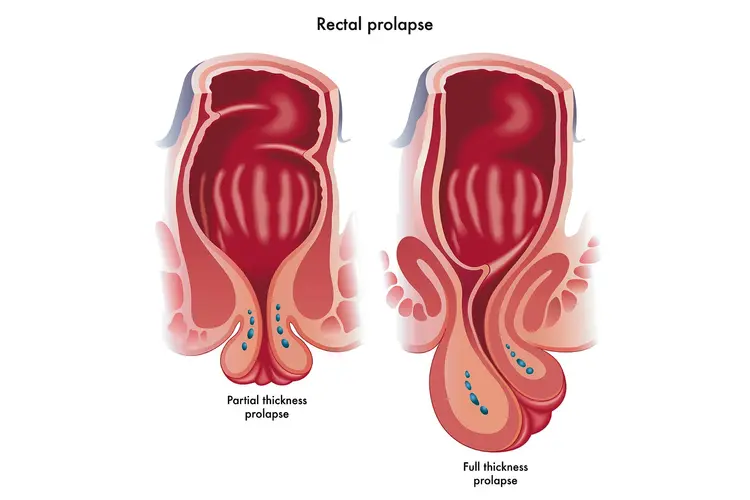
Rectal prolapse happens when the rectum – the last section of the large intestine – loses its normal support and slides down through the anal opening. It usually develops slowly, starting as a bulge that appears only during a bowel movement and later staying out permanently.
It is far more common in women over 50, but it also affects men, younger adults with chronic constipation, and people with pelvic floor weakness or neurological conditions. Left untreated, prolapse tends to worsen, and complications like incontinence, ulceration, bleeding, or a trapped (incarcerated) rectum become more likely.
If you are searching for experienced rectal prolapse specialists in Mumbai, Dr. Rajan Modi provides accurate diagnosis and stage-appropriate treatment – from conservative management for early cases to laparoscopic and robotic-assisted surgery for full-thickness prolapse – at his clinic in Goregaon West.
What Causes Rectal Prolapse?
Understanding the root causes can help with prevention and timely treatment. Common causes include:
- 1. Chronic constipation and straining - repeated downward pressure stretches the ligaments that anchor the rectum
- 2. Chronic diarrhoea - persistent urgency and frequency weaken the same supporting tissues
- 3. Pregnancy and childbirth - multiple deliveries, prolonged labour, or difficult vaginal births damage the pelvic floor
- 4. Age-related weakness - loss of pelvic floor muscle tone and reduced anal sphincter strength after 50
- 5. Chronic cough - long-standing COPD, asthma, or smoker's cough raises abdominal pressure repeatedly
- 6. Neurological conditions - spinal cord injury, multiple sclerosis, cauda equina syndrome, or lower back trauma impair nerve control
- 7. Previous pelvic or abdominal surgery - can alter rectal support and anatomy
- 8. Cystic fibrosis - the commonest cause in children with prolapse
If you identify with these symptoms, consult Rectal Prolapse Specialists in Mumbai for an accurate diagnosis and treatment plan.